Draw-to-Save Puzzle Tips: Protect the Shiba with One Line
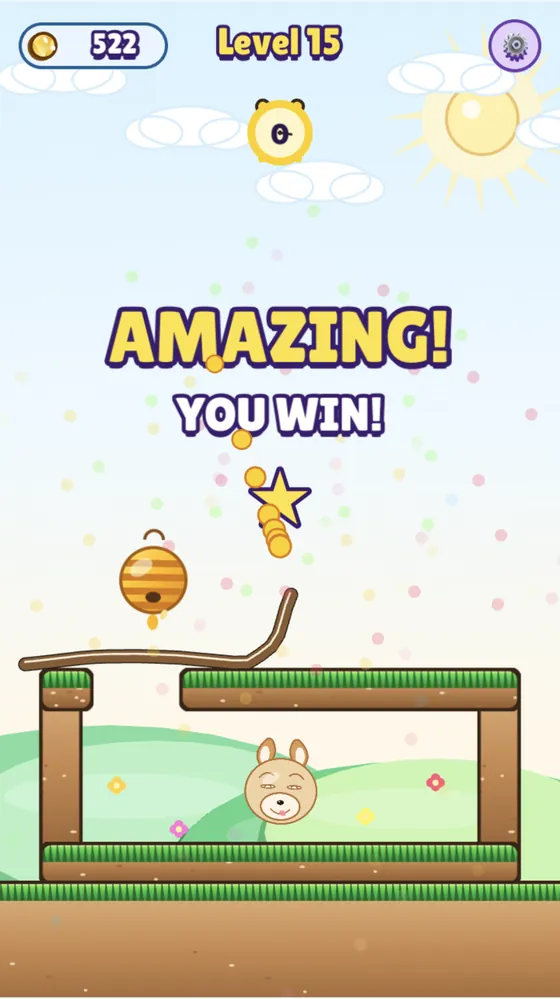
In Shiba Rescue your job sounds simple: draw one line to keep a little dog safe from angry bees. The trick is that the line follows real physics. These tips apply to nearly every draw-to-save puzzle.
Look first, draw second
Before you touch the screen, find every beehive and think about where the bees will fly. Notice the ground, the ledges and the walls that are already there. Good solutions use the level and add only the missing piece.
Use the terrain as free walls
Rocks, wood beams and the ground are already barriers. Draw only enough to seal the remaining gap. A short line that overlaps the edges of existing walls is stronger than a long line that floats in the air.
Anchor both ends
A line that is not attached to something can slide or fall when it carries weight. Start and end on solid ground or a heavy block, and let the ends overlap slightly. Heavy shapes such as a lid, a roof or a ramp tend to stay put.
Shape the line for the job
- A lid (flat roof over the dog) works when bees come from above.
- A ramp makes falling objects roll away from the dog.
- A cage around the dog or the hive works when bees come from several sides.
- A plug closes the opening of a pocket or cave.
Think about the hive
If bees pour out of a hive, you can trap the hive instead of protecting the dog. Enclosing the source can be simpler than building a full shield.
Keep it simple and retry quickly
Do not draw complicated scribbles. A clean line is easier to predict. If the first attempt fails, watch where the bees got through and adjust only that part. A level is often solved on the second or third try.
Play with kids
Draw-to-save puzzles are great to play together: one person looks for the problem, the other draws. Discussing what will happen before you release the bees makes it a little physics lesson.
Hungry for more puzzles? Try Color Block and Sorting Puzzles: Plan Ahead with Poffy Jam and Nibblits.